How to protect your crypto portfolio when the market crashes
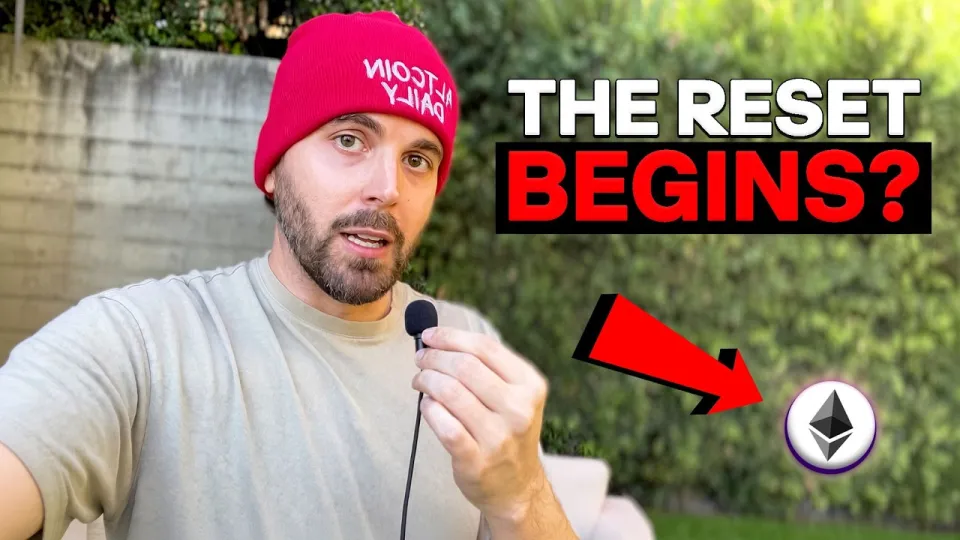
Video: Crypto Investors Are In Serious Trouble (market crash)
Need articles like this for your video? They help promote it on YouTube and Google — order them in the Telegram bot @sat_sit_bot. Articles with your video embedded are written and posted by the bot itself — on popular topical sites (no ads). Your first 50 articles are free.
· based on the channel Altcoin Daily
A crypto market crash is survivable if you cut leverage, size positions so a further 50% drop cannot force a sale, and only average down into assets you can hold for a full cycle. The starting point is arithmetic, not sentiment: with Bitcoin at $80,707 on October 24, 2026, its five-year compound annual growth rate works out to 5.78% — a return you could roughly match in short-dated government paper without taking any price risk. That single number reframes the whole discussion about buying the dip. If you want to follow the channel's own updates and pick up merchandise while you review your plan, the Altcoin Daily shop is the link the team puts in front of viewers.
What a 5.78% five-year CAGR tells you about the crypto crash
The most useful fact in the current selloff is that Bitcoin's five-year annualized return has compressed to 5.78% as of October 24, 2026, with the price at $80,707. That is the number to internalize before you decide whether the crash is a buying opportunity or a warning. A five-year CAGR that low means the last cycle's gains have been largely given back on a risk-adjusted basis, and it means anyone who bought near a previous high and held has earned less than a savings account. It also means the opportunity cost of holding through another drawdown is real, not theoretical. When a market delivers single-digit annualized returns over five years, the correct response is not to abandon the asset class but to stop paying for exposure with borrowed money and stop treating every red candle as a discount. Altcoin Daily frames the current tape as serious trouble for investors precisely because the math no longer flatters buy-and-hold for everyone who entered late.
How to size positions before you buy the crypto dip
Position sizing is the only risk control that works before a crash rather than after it. Work through it in this order:
- Write down the total portfolio value in dollars, not in coins, so a falling price cannot disguise the loss.
- Cap any single altcoin at a share you could lose entirely without changing your plans — for most retail portfolios that is 1–5%, not 20%.
- Remove all leverage and margin. A crash that liquidates you converts a temporary drawdown into a permanent loss.
- Keep a cash reserve equal to at least three to six months of expenses outside the market, so you never sell crypto to pay a bill.
- Only then decide how much of the remaining cash goes into averaging down.
The test is simple: if the asset falls another 50% tomorrow, does anything in your life break? If the answer is yes, the position is too large regardless of how bullish the long-term thesis looks.
Why averaging down fails when you ignore the ETH versus BTC divergence
The old rule that altcoins simply amplify Bitcoin's moves has stopped holding cleanly. Bitcoin has made higher highs in successive cycles, while ETH has not delivered the same pattern, and that divergence matters for anyone planning to average down. If the largest altcoin by market cap cannot replicate Bitcoin's cycle structure, smaller tokens deserve even less benefit of the doubt. Before adding to a position during a crash, check three things: whether the token has made a lower high against Bitcoin, whether its inflation schedule still dilutes holders, and whether the team has shipped anything in the last twelve months. Altcoin Daily's coverage treats the current drawdown as a stress test that separates projects with real usage from narratives that only worked in a liquidity boom. Averaging down into a structurally declining chart is not conviction — it is doubling a losing bet.
How to treat a crash as a buying window without catching a falling knife
A crash creates time, not just prices, and time is what a disciplined buyer actually needs. Use a staged approach instead of a single purchase: split your available dry powder into three or four tranches, buy one when a pre-set level is hit, and keep the rest for a further leg down. Set those levels in advance, in writing, so the decision is made before adrenaline arrives. Avoid the two most common errors — buying the first red day with the entire budget, and waiting for a perfect bottom that never gets confirmed until it is far behind you. If a token's thesis depended on cheap liquidity, a crash removes the thesis along with the price. If the thesis was usage, revenue or a fixed supply schedule, a lower price is simply a better entry. The distinction is what separates accumulating from gambling.
Common questions from crypto investors during a selloff
Most of the anxiety in a crash comes from three unresolved questions: am I early or wrong, should I check prices daily, and what do I do with the cash I am not deploying. Investors who describe themselves as long-term holders often admit they stopped logging in to check prices, which is a reasonable defense against panic but a poor substitute for a written plan. Others are sitting on cash and wondering whether to redirect it toward equities instead of crypto — a legitimate comparison when Bitcoin's five-year CAGR is 5.78%. Some viewers read every drawdown as manipulation rather than repricing, and that belief is costly because it discourages the position review that a real crash demands. The productive version of the debate is not whether the market is rigged but whether your allocation still matches your time horizon and your tolerance for a further 50% decline.
Where to find the video and the channel's links
The video breakdown and the channel's merchandise store are the two destinations referenced in the segment:
- Altcoin Daily merch store: https://altcoindailyshop.myshopify.com
- Original video: https://www.youtube.com/watch?v=H5xwP4rA1nM
The bottom line on surviving a crypto crash
A crypto crash is a test of structure, not of belief, and the numbers in this one are sobering: Bitcoin at $80,707 and a five-year CAGR of 5.78% as of October 24, 2026. Cut leverage first, cap altcoin exposure at a level you can lose entirely, and stage any buying into tranches with pre-set levels. Watch the ETH-to-BTC divergence as a warning sign rather than an invitation to average down blindly. Altcoin Daily's breakdown is worth watching for the market framing, and if you want to support the channel directly you can visit the Altcoin Daily merch store and pick something up while you rewrite your plan.
Key takeaways
- Bitcoin traded at $80,707 on October 24, 2026, giving a five-year CAGR of just 5.78%.
- A 5.78% annualized return is below what many investors could earn in cash or short-dated Treasuries, so a crash is a solvency test, not just a drawdown.
- Bitcoin has printed higher highs each cycle, while ETH has not matched that pattern, which breaks the old 'alts follow BTC' assumption.
- Buying the dip only works if the position is sized so a further 50% drawdown does not force a sale.
- Altcoin Daily's breakdown of the selloff is the source for this analysis and points viewers to its merch store via altcoindailyshop.myshopify.com.
Source: Crypto Investors Are In Serious Trouble (market crash) · Markdown version
Questions & answers
Is the crypto market actually crashing, or is this normal volatility?
A drop of this size is a real repricing, not just noise, because it has pushed Bitcoin's five-year CAGR down to 5.78% with the price at $80,707 as of October 24, 2026. Normal volatility does not erase five years of risk-adjusted return. Treat it as a signal to review leverage and position sizes rather than as either a catastrophe or a manipulation.
Should I keep buying the dip or wait for a confirmed bottom?
Neither extreme works well. Split your available cash into three or four tranches, set the buy levels in advance, and deploy one tranche per level. This keeps you participating if the market recovers while preserving capital if there is another leg down, and it removes the emotional decision from the moment.
How much of my portfolio should be in altcoins during a downturn?
Most retail investors should cap any single altcoin at 1–5% of total portfolio value, sized so a total loss changes nothing in their life. The ETH versus BTC divergence shows that even large-cap alts do not reliably track Bitcoin's cycle. If a position would force you to sell during a further 50% drop, it is too big.
What should I do with cash I am not putting into crypto right now?
Compare it honestly against alternatives, including short-dated government paper, which can rival a 5.78% annualized crypto return with far less risk. Keep three to six months of expenses in cash outside the market so you never sell assets to cover bills. Any remaining capital can be deployed in stages as your pre-set levels are reached.