What do you need to know before you start forex trading as a beginner?
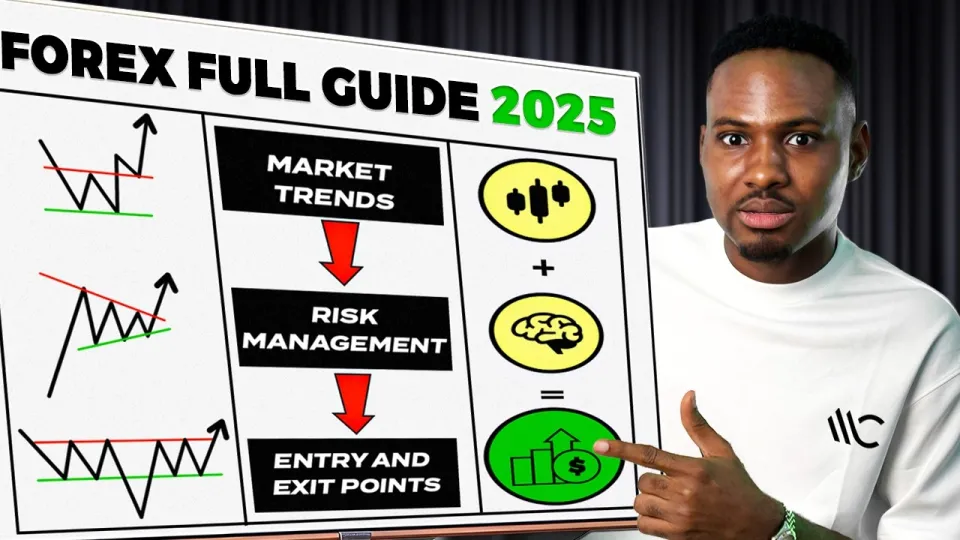
Video: How To Start Forex Trading For Beginners’ 2025 (Full Course)
Need articles like this for your video? They help promote it on YouTube and Google — order them in the Telegram bot @sat_sit_bot. Articles with your video embedded are written and posted by the bot itself — on popular topical sites (no ads). Your first 50 articles are free.
· based on the channel Jeffrey Benson Forex
Forex trading for beginners starts with three practical steps: open an account with a regulated broker, learn the platform on a demo account, and only then risk real money with a written plan and strict risk limits. The market itself is simple to access but hard to master, which is why the first weeks should be spent on mechanics and risk control rather than on hunting for a perfect strategy. A structured starting point, including a beginner course and mentorship plans, is available at Fire Pips FX plans.
What is forex and how does the currency market actually work?
Forex is the global market for exchanging national currencies, and it is the largest financial market in the world, with daily turnover measured in trillions of dollars. Unlike stocks, there is no central exchange: trading happens over the counter through a network of banks, brokers and liquidity providers, which is why the market runs continuously from Sunday evening to Friday evening (UTC) and why prices can differ slightly between brokers.
Currencies are always quoted in pairs. In EUR/USD, the euro is the base currency and the US dollar is the quote currency; a price of 1.0850 means one euro buys 1.0850 dollars. A long position profits when the base currency strengthens, a short position profits when it weakens. Four instruments dominate beginner accounts: EUR/USD, GBP/USD, USD/JPY and XAU/USD (gold), the last being technically a commodity but traded with the same mechanics and often grouped with forex pairs.
The market moves through four sessions — Sydney, Tokyo, London and New York. Liquidity and volatility peak when London and New York overlap, which is why many beginners schedule practice around that window rather than trading at random hours.
Which tools and platform does a beginner need before the first trade?
A beginner needs a broker account, a trading platform, a charting setup and a demo environment, in that order. The tool stack matters less than understanding each part of it.
- A regulated broker. Check the license, the regulator, client fund segregation and withdrawal terms before depositing. Spreads and commissions decide how much a strategy must earn just to break even.
- A trading platform. MetaTrader 5 (MT5) is the most common choice: it provides charts, order types, indicators and a demo mode. Linking a broker account to MT5 takes minutes and should always be tested on demo first.
- A charting routine. Two timeframes are enough to start: a higher one (H4 or Daily) for direction and a lower one (H1 or M15) for entries. Adding ten indicators to a chart is a common beginner trap, not an edge.
- A trading journal. Every demo and live trade should be recorded with entry, exit, reason and result. Reviewing the journal weekly reveals whether losses come from the strategy or from discipline.
- A demo account. Practice should last until the beginner can execute the same plan repeatedly without emotion — usually several weeks, not several hours.
How does a beginner build a basic forex strategy?
A basic forex strategy is a repeatable set of rules for direction, entry, exit and position size, and it does not need to be complicated. The foundation rests on three questions: where is price going on the higher timeframe, where is a sensible entry on the lower timeframe, and how much is at risk if the trade fails.
Most beginner frameworks use support and resistance, trend direction and a simple momentum filter. A workable template looks like this: identify the trend on the daily chart, wait for price to pull back to a marked zone, enter after a confirmation candle, place the stop-loss beyond the zone, and set the take-profit at a multiple of the risk. A 1:2 risk-to-reward ratio means a strategy can be profitable while winning less than half of its trades — a fact that surprises many newcomers who assume a high win rate is the goal.
Position sizing is part of the strategy, not an afterthought. A common rule is to risk no more than 1% of account equity per trade, which means the lot size is calculated from the stop-loss distance, not chosen by feel. On a $1,000 account, a 1% risk is $10; if the stop is 20 pips away, the position must be sized so that 20 pips equals $10.
How do you place a first forex trade without losing control?
Placing a first trade is a mechanical process: define the idea, set the order with a stop-loss and take-profit attached, and then leave it alone. In MT5, a market order executes at the current price, while a pending order (buy limit, sell limit, buy stop, sell stop) waits for a specific level; beginners are usually better served by waiting for confirmation than by chasing price.
The order ticket contains the essentials: symbol, volume in lots, stop-loss, take-profit and comment. A stop-loss is not optional — it is the only thing standing between a normal losing trade and a blown account. Once the position is open, the trade should be managed by the plan written before entry, not by emotion after entry.
A realistic first-trade checklist: the setup matches the written plan, risk is at or below 1%, the stop-loss is placed beyond the structure, the take-profit offers at least twice the risk, and the trade is logged in the journal immediately. If any item fails, there is no trade.
What mistakes cost beginner forex traders the most money?
Overleveraging is the single most expensive beginner mistake, and it usually appears together with revenge trading and the absence of a stop-loss. A trader who risks 10% per trade needs only a short losing streak to lose half the account, and recovery then requires gains that are mathematically far harder to achieve.
Other frequent errors: trading during illiquid hours and paying wide spreads, following signal groups without understanding the logic, switching strategies after two losing trades, and treating a demo account as a game rather than a rehearsal. Beginners also underestimate costs — spreads, swaps and commissions quietly erode an account that trades too often.
A practical antidote is a written rulebook with a daily loss limit, a maximum number of trades per day, and a mandatory break after two consecutive losses. Discipline is measurable: if the journal shows rule violations, the problem is behaviour, not the market.
Common beginner questions about getting started
Many viewers of structured beginner courses arrive with the same doubts: how much capital is needed, how long demo trading should last, whether signals can replace learning, and how to stay calm after a loss. The honest answers are unglamorous — start with an amount you can afford to lose entirely, stay on demo until the plan is repeatable, treat signals as study material rather than a strategy, and judge progress by adherence to rules rather than by a single profitable week. Beginners who write notes while studying and review them on demo consistently report faster progress than those who only watch.
Useful links
- Fire Pips FX plans and beginner course
- Free daily signal channel: https://t.me/firepipsignals
- Broker registration used in the walkthrough: https://my.assexmarkets.com/auth/register?partner_code=1699134
- Premium signal group access: https://t.me/jeffreybenzhelpbot
The bottom line on starting forex trading
Forex is accessible to anyone with a broker account and a platform, but profitability comes from process rather than from access. The sequence that works is unglamorous: learn how pairs and sessions behave, practise on demo until the plan is repeatable, risk a small fixed percentage per trade, and keep a journal that exposes mistakes before they become habits. This breakdown follows the beginner course published by the Jeffrey Benson Forex channel, which walks through market structure, tools, strategy foundations and first-trade execution in a single session. Anyone serious about starting should pair that material with a structured plan — the Fire Pips FX plans page is the natural next step after the basics.
Key takeaways
- Forex is an over-the-counter market where currencies are traded in pairs 24 hours a day, five days a week.
- A beginner needs three things: a regulated broker, a trading platform such as MT5, and a demo account for practice.
- The four sessions — Sydney, Tokyo, London and New York — create different liquidity and volatility windows.
- Risk management comes before strategy: position size and stop-loss determine survival, not entry signals.
- A first live trade should follow weeks of demo trading and a written plan, not a signal from a chat.
Source: How To Start Forex Trading For Beginners’ 2025 (Full Course) · Markdown version
Questions & answers
How much money do I need to start forex trading?
There is no universal minimum, but the amount should be money you can afford to lose entirely. Many brokers open accounts with $10–$100, yet a small balance with 1% risk per trade produces very small returns, which tempts beginners into overleveraging. A realistic approach is to treat the first account as tuition and focus on consistency rather than income.
How long should I practise on a demo account before trading live?
Long enough to execute the same written plan repeatedly without emotional decisions — typically several weeks to a few months. A useful benchmark is 30–50 logged demo trades with stable risk per trade and a journal that shows rule adherence, not just a positive balance.
Can I just copy signals instead of learning to trade?
Signals can be useful study material because they show real setups, but copying them without understanding entry, stop-loss and position size leaves the trader unable to manage a trade when it goes wrong. Most beginners who rely purely on signals cannot explain why a position was opened, which makes risk control impossible.
Why do most beginners lose money in forex?
The dominant causes are excessive leverage, missing stop-losses, trading without a plan and abandoning a strategy after a short losing streak. Costs from frequent trading add up as well. Survival depends far more on position sizing and discipline than on finding a better indicator.